
What is Computer Vision and How It Works in Manufacturing
Computer vision is the technology that allows machines to analyze images and videos in real time, interpreting visual data to make autonomous decisions.In manufacturing, it goes far beyond simple security cameras: it transforms raw data into operational intelligence.
The process works in three main steps.First, high-resolution cameras capture images of the production line. Then, artificial intelligence algorithms process these images, identifying patterns, defects and anomalies.Finally, the system automatically sends commands to machines to adjust parameters or signal problems to operators.
Unlike manual systems, computer vision does not tire, does not make errors by inattention and processes millions of data per second.A smart camera can inspect 100 parts per minute while a human inspector examines a maximum of 10 to 15 parts in the same period.
Defect Detection and Quality Control
One of the most valuable applications is automatic defect detection before defective products reach the customer. Computer vision systems identify cracks, deformations, misalignments, color variations and finishing problems with accuracy of up to 99.5%.
Electronics companies use this technology to check for welds, improperly assembled components and damaged packaging.Food manufacturers inspect whether bottles are full, properly closed and labeled.The automotive industry validates body welds, part alignment and surface finish at speeds that would make manual inspection impossible.
The financial impact is immediate: 30% to 50% reduction in the rate of defects detected post-production, decrease in product recall and savings in rework costs.When a defect is identified at the beginning of the line, the cost of correction is minimal; when discovered after complete assembly, the loss is exponential.
Speed Optimization and Productive Efficiency
Real-Time Monitoring
Computer vision enables continuous tracking of the production line, identifying bottlenecks before they cause stops. The system detects when a machine is operating below optimum speed, when raw materials are missing or when there is congestion between steps.
A plastic component factory implemented this technology and increased productivity by 25% in just six months. The system automatically alerted when molds needed cleaning or when the process temperature was out of the optimal range, avoiding rejection of parts and unexpected stops.
Predictive Analysis and Preventive Maintenance
Smart cameras can predict machine failures by observing visual signals such as leaks, increasing misalignments or wear and tear on parts. This predictive monitoring reduces unscheduled downtime, which costs on average R$ 5 thousand to R$ 50 thousand per hour in industrial plants.
Repetitive Task Automation and Collaborative Robotics
Computer vision-equipped robots perform repetitive tasks with speed and precision impossible for humans, freeing workers for activities that require creativity and complex problem solving.
Pick-and-place systems (take and place) use vision to locate components in random positions, move parts with millimeter accuracy, and arrange products in boxes. Robotic welders visually track the joining of parts and adjust trajectory in real time. Cutting machines automatically recognize the optimal cutting pattern minimizing material waste.
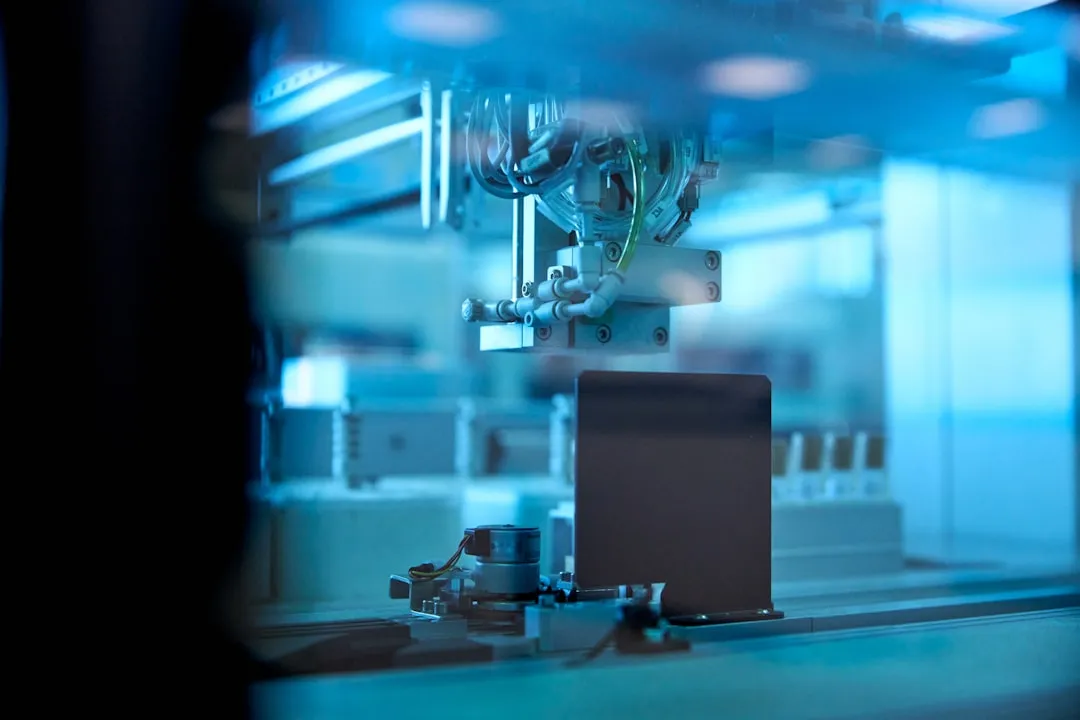
Companies that implemented robotics with computer vision report an increase of 40% to 60% in production, with a simultaneous reduction of 50% in operational errors. The initial investment of R$ 300 thousand to R$ 1.2 million is typically recovered in 18 to 36 months.
Product Traceability and Authenticity
Computer vision reads and validates barcodes, QR codes and serial numbers at industrial speed, ensuring complete traceability of the product from the raw material to the end customer.This is critical in industries such as pharmaceuticals, where authenticity is mandatory.
Integrated OCR (Optical Character Recognition) systems read labels, validate expiration dates and verify that markings correspond to the data of the ERP system. A drug factory can track 500 thousand units per day with 100% accuracy, impossible with manual inspection.
In addition to legal compliance, traceability reduces supply chain contamination risks, detects counterfeit products and facilitates timely recalls when needed, protecting brand reputation.
Practical Implementation: Steps to Get Started
1. Diagnosis and Selection of Processes
Identify bottlenecks where manual inspection is slow, where error rate is high, or where repetition causes fatigue. Processes with clear visual pattern (welds, alignment, colors) are the best initial candidates.
2. Infrastructure and Equipment
Invest in cameras of adequate resolution (minimum 5MP for fine details), lenses with correct focus for the operating distance, controlled lighting and hardware with sufficient processing. Prototypes can cost R $ 50 thousand to R $ 150 thousand.
3. Training and Adaptation
Algorithms learn from examples. Collect 1 thousand to 5 thousand images of good and defective parts to train the model. This dataset is critical: the more varied and representative, the better the system performance in the field.
4. Integration with Existing Systems
Connecting computer vision to PLC (programmable logic controller), MES (manufacturing execution system) and ERP ensures that decisions are automatic and traceable. This integration increases ROI by up to 35%.
Real Challenges and Solutions
Implementing computer vision is not trivial.Variations in lighting, reflections on metal surfaces and seasonal changes in raw material can affect accuracy.Solution: using structured LED lighting, light diffusers and algorithms trained in multiple conditions.
Small industries often lack resources.Alternative: starting with a critical process, proving rapid ROI, and gradually expanding.Suppliers also offer SaaS (software as a service) models with monthly rent, reducing capital investment.
Solutions: partnerships with local integrators, team training and use of low-code platforms that abstract technical complexity.Brazilian universities already offer courses in industrial computer vision; investing in internal training is strategic.