Understand Fundamental Differences
Choosing between conversational AI and traditional chatbots is a strategic decision that directly impacts your customer experience and ROI.These two technologies work in completely different ways, and understanding their mechanics is essential before investing.
Traditional chatbots operate with pre-programmed rules. They have been trained to recognize specific keywords and respond with predefined messages. If a user asks a question that does not exactly fit the programmed options, the bot fails or offers a generic and frustrating answer.
Conversational AI, in turn, uses natural language processing (NLP) and machine learning. She understands context, nuances, intentions behind words and learns from each interaction.It can keep conversations fluid, understand slang, typos and even sarcasm.The difference is colossal: it is like talking to someone who really understands you.
Technical Differences That Matter
Intent Recognition
Traditional chatbots use matching patterns: search for specific words to trigger responses. If the user types "want to talk to a human", but the bot was programmed only for "need help", it will not recognize the intention.
Conversational AI understands intention regardless of how it is expressed. She identifies that "I want an attendant", "connect me to an agent" and "let me talk to someone" have the same intention, despite the different words.
Learning & Adaptation
Traditional chatbots are static.Each update requires manual technical intervention to reprogram rules.If you detect that many users ask a question that is not in the script, you need to hire a developer to add the answer.
Conversational AI continuously learnsit analyzes patterns of conversations, identifies gaps and improves responses automatically.Some systems even suggest new intentions that should be trained, saving time and resources.
Practical Advantages of Each Solution
When to Use Traditional Chatbots
Traditional chatbots still have their place very small business or ultra-specific use cases, they are enough. A dental clinic that only needs to make appointments, confirm appointments and provide schedules does not necessarily need advanced AI.
St cheaper to implement. You do not need to collect large volumes of data or do complex training. The initial setup is fast and technical support is simpler.If your operation is small or budget is tight, it can work.
Offerings total predictability. You know exactly what the bot will answer. This is useful in regulated industries (such as banking or legal) where you need to control each word for compliance.
When to Use Conversational AI
Medium to large companies who deal with high volumes of service earn a lot with conversational AI. An e-commerce with thousands of daily questions about products, returns, freight & AI is clearly superior.
If your business need to create differentiated experiencesconversational AI enables natural conversations that increase satisfaction and loyalty. Customers feel heard more when the system understands context and offers customized solutions.
A McKinsey study showed that companies that implement conversational AI reduce cost per service up to 40%automation solves more problems without involving human agents.
Cost-Benefit Analysis
Traditional chatbots cost between R$ 5 thousand to R$ 30 thousand for implementation, with maintenance between R$ 1 thousand to R$ 5 thousand monthly. The initial investment is low, but the cost grows as you need to add functionalities.
conversational AI requires greater investment: R$ 20 thousand to R$ 150 thousand in setup, depending on the complexity. However, it significantly reduces customer service costs. A company of 100 attendants can reduce to 60 attendants with AI, saving hundreds of thousands in payroll.
O typical payback is between 6 to 18 months for companies with high call volume.If you serve less than 500 conversations per month, traditional chatbots may be more economically viable.
Metrics that Reveal the Best Way
Before deciding, analyze these indicators of your current business:
- Conversation volume: Over 1,000 messages per month?Conversational AI pays fast.
- Resolution rate: If too many users need to be scaled to humans (over 30%), conversational AI dramatically reduces that number.
- Variety of questions: If your customers ask very different and creative questions, AI is essential.
- Budget: Startups with few resources should start with traditional chatbots and evolve.
- Segment: E-commerce, technical support and HR earn a lot with AI. Very niche services can look good with traditional bots.
Practical Path to Implementation
For Traditional Chatbots
Set the conversation flow: map out the 20 to 30 most common questions your customers ask. Assemble decision trees (if the user types X, answer Y). Use platforms like ManyChat, Drift, or even Google My Business to set up.
For Conversational AI
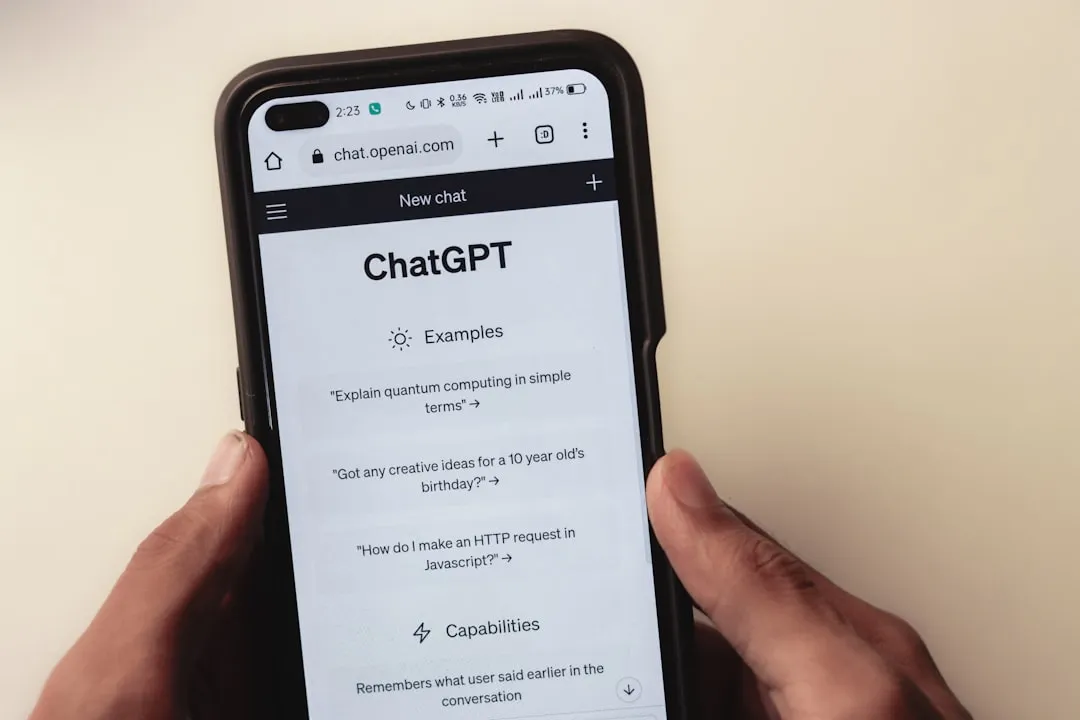
Start with one ready-made solution as integrated ChatGPT, Claude or specialized tools (Zendesk, Intercom). Collect historical conversations or create ideal question and answer datasets. Integrate to your website or WhatsApp and monitor performance.
It doesn't have to be perfect on day 1. AI improves over time. Set metrics: satisfaction rate, resolution time, cost per conversation. Review every 30 days.
Conclusion: Which to Choose Now?
Choose conversational AI if: your business processes more than 1,000 conversations/month, has an initial investment budget, and seeks real scalability. ROI is proven for e-commerce, SaaS, fintech and technical support.
Choose traditional chatbots if: it is startup in early stage, volume of conversations is small (below 500/month), or has very specific use case. Use as a bridge until migrating to AI later.
The trend is clear: Conversational AI is the future. Companies that do not adopt will fall behind in customer experience. If your budget allows, start now.If not, start with traditional chatbots and plan the evolution for the next 12 months.