
You can diagnose problems in your car without going to the mechanic using an automotive scanner.This device reads the vehicle error codes and helps you understand what is happening in the engine.

Car Scanner ELM OBD2
CAR SCANNER LLC
The automotive defect scanner has become accessible to the general public, allowing you to make more informed decisions about car maintenance.In this guide, you will learn how to use this tool in a practical and safe way, avoiding unnecessary expenses with diagnostics in workshops.
What is an automotive diagnostic scanner
A car scanner is an electronic device that connects to the OBD-II port of your vehicle to read data and identify problems. It works as a translator between the car computer and you, interpreting signals that the engine sends when it detects anomalies. This equipment accesses information that would be hidden without a proper diagnostic tool.
The market offers different types of scanners, from basic models that cost little to very expensive professional software. Basic scanners are enough for initial diagnostics and identification of simple error codes.As you progress in learning, you can invest in more robust equipment that offers detailed analysis of engine behavior.
Types of scanners available in the market
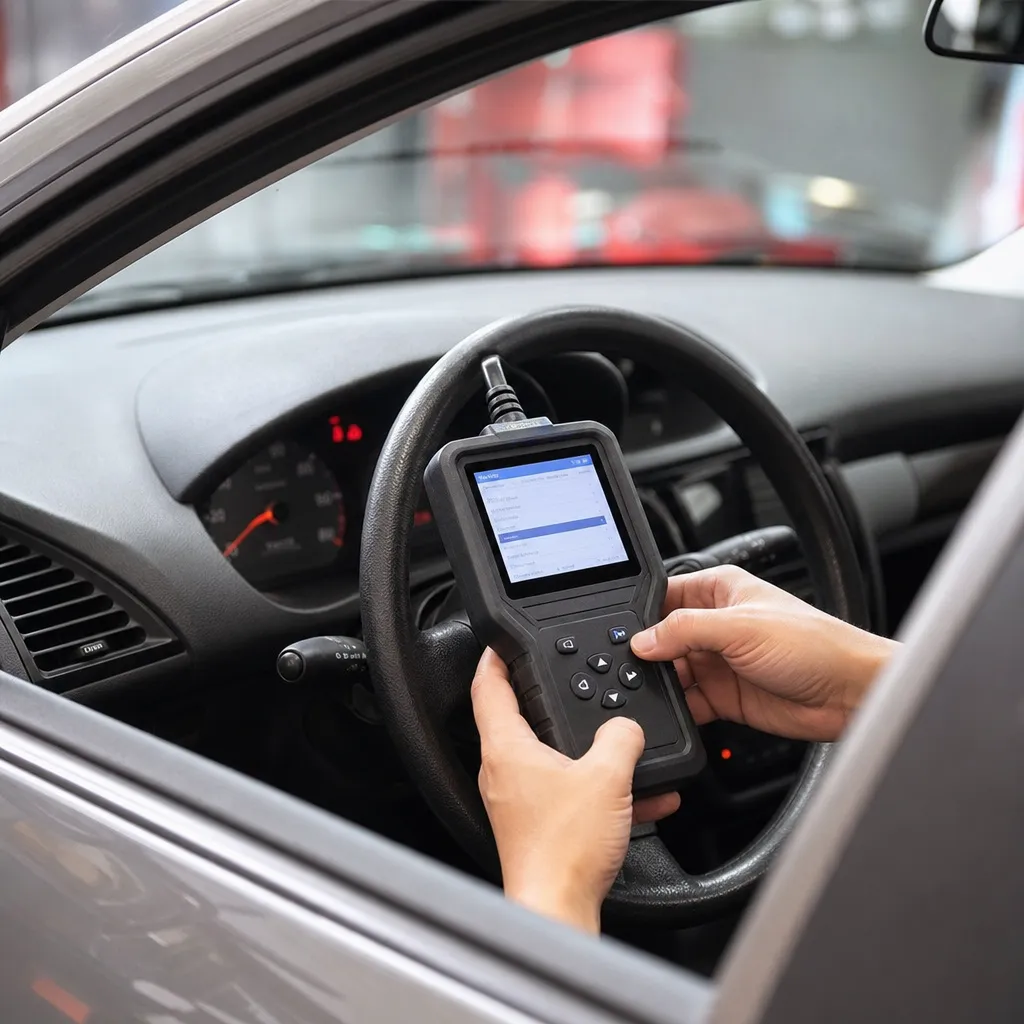
Portable scanners are small devices that you plug directly into the OBD-II port and can read information on the device itself. They have an integrated screen and are practical for quick checks when the engine check light comes on. This type is ideal for owners who want basic monitoring without high investment.
Bluetooth scanners connect to your smartphone through an adapter, transmitting data to an application on the mobile. You view the information through the phone screen and can record diagnostic histories easily. This model offers better portability and generally allows you to store data for later analysis.
Professional scanners are specialized computers used in workshops and dealerships for in-depth diagnostics.They provide access to manufacturer-specific codes and allow reprogramming of electronic components.Although expensive, they are indispensable when you need very detailed technical information or when you intend to offer this service to third parties.
How to locate the OBD-II port on your vehicle
The OBD-II port is located under the instrument panel, usually on the driver's side, but may vary depending on the car model. You should look for a rectangular connector with two rows of pins that looks like an old computer socket. In most cases, it is located near the pedals or just below the steering wheel.
Some manufacturers place this door in less obvious places, hidden by removable panels or plastic coatings.If you do not immediately find, consult the owner's manual or look for specific images of your model on the internet.There is no risk in looking, as the door has been standardized since 1996 for all cars sold in Brazil.
Step by step to use the scanner correctly
Before connecting the scanner, make sure that the car is off and the battery has proper charge. Locate the OBD-II port as directed earlier and examine the area to remove any obstruction. After ensuring that everything is accessible, proceed to the device connection.
Insert the scanner connector into the OBD-II port firmly until you hear a click indicating correct docking. Turn on the car without starting, only in the contact position, so that the electronic system starts. Wait a few seconds for the scanner to establish communication with the engine control unit.
Browse the scanner menu to access the reading of fault codes or DTCs (Diagnostic Trouble Codes). You will see a list of problems identified with their respective numeric codes. Write down all codes displayed and, if available, read the descriptions that the device offers for each detected error.
After writing down the codes, turn off the car and remove the scanner carefully. Fix the OBD-II port in its original location and adjust any panel you have removed. You now have concrete information to research the meaning of each code and determine the severity of the problem.
Understanding your car's error codes
Error codes are composed of a letter prefix followed by four numbers, such as P0101 or P0420. The initial letter indicates the category of the problem: P means engine, B means body, C means chassis, and U means network. This standardized system allows you to find information about any code in specialized online resources.
The first number after the letter classifies the severity: zeros indicate standardized SAE problems, while higher numbers show manufacturer-specific codes. The second number specifies the affected system, such as fuel or emissions.The last two numbers identify the exact component or specific condition that caused the error.
A P0101 code refers to engine airflow outside the expected range, often caused by a dirty sensor or clogged air filter.P0420 indicates that the catalytic converter is not working efficiently, which requires further investigation or component replacement. Understanding this structure helps you assess whether the problem is simple or requires professional intervention.
Basic diagnostics you can do yourself
Many automotive problems are simple and can be solved without a professional mechanic.If the scanner indicates a dirty sensor, you can clean or replace this component by following online tutorials specific to your car model.Simple electrical problems, such as a faulty oxygen sensor, are also within the reach of owners willing to learn.
Failures in the air, oil or fuel filter are easily identifiable by the scanner and equally simple to solve. You buy the spare part in the local trade, watch a video showing the procedure and replace at home with basic tools. These actions save hundreds of dollars that would be spent on workshop labor.
Battery recharge problems, burned lamps and failures in temperature sensors also appear in the diagnostics of the scanner. Checking the state of the battery with a multimeter, replacing a lamp or cleaning oxidized contacts are tasks that you easily perform at home. The knowledge acquired with the scanner turns you into someone capable of solving many simple problems autonomously.
When you need to look for a professional mechanic
Some problems require in-depth technical knowledge or specialized tools that you do not have. If the scanner indicates problems with the transmission, suspension or brakes, it is time to stop and seek a specialist. These systems are critical to your safety and an incorrect diagnosis can result in serious accidents.
Engine failures that require reprogramming, problems with complex electronic injection or codes related to the vehicle stability system also require professional workshop. The scanner offers the initial diagnosis, but performing the repair may be beyond your capabilities and knowledge. At this time, use the information collected to discuss the problem with the mechanic in a reasoned way.
Fluid leaks, intermittent electrical problems that the scanner cannot reproduce, and situations where multiple components failed simultaneously require face-to-face investigation.A professional can do additional tests that the scanner does not provide, such as pressure measurements or electrical resistance checking.Acknowledging their limits is just as important as using the tool with confidence.
Current trends in automotive diagnostics
Artificial intelligence is transforming how scanners interpret data, providing predictive analytics that alert you to problems before they become critical. New applications use machine learning to compare your car data with patterns from hundreds of thousands of similar vehicles, identifying subtle anomalies that traditional devices do not capture.
5G connectivity is allowing scanners to transmit real-time data to the cloud, where advanced algorithms analyze vehicle behavior continuously. You receive notifications on your smartphone when the car is having abnormal fuel consumption or when a component is slowly degrading. This continuous monitoring extends the life of the car and prevents unpleasant surprises in the middle of the street.
Many automakers now offer native integration with smartphones for diagnostics, allowing you to access car information through the manufacturer's account.Tesla, BMW and other premium brands provide detailed data to the owner without the need for an external scanner.This move sets a new standard where diagnostic transparency is expected from the owner.
Good practices for using scanner without damaging the car
Always turn off the car before connecting or disconnecting the scanner to avoid electronic damage caused by voltage spikes. The vehicle battery provides continuous power to sensitive systems even when turned off, and abrupt interruptions can corrupt control unit data. Wait a few seconds after turning off before manipulating the connector.
Examine the scanner connector and OBD-II port regularly for dirt, corrosion or pin damage. Use compressed air to clean the port if necessary and check that the scanner connector shows signs of wear. A poor contact can generate incorrect readings that lead to misdiagnosis.
Do not force the connector when inserting, as OBD-II ports have a standardized socket and should enter smoothly with natural firmness. If the connector does not fit, remove it completely and try again with correct alignment.Forcing may damage the scanner or port pins, making future diagnostics impossible.
Keep your scanner up to date with the latest software versions and code databases. Manufacturers constantly add new code and improve interpretations as they learn more about typical faults.An outdated scanner may not recognize problems in recent vehicles or offer inaccurate interpretations.
Complementary equipment that enhances the diagnosis
A digital multimeter complements the scanner very well for deeper electrical diagnostics.You can measure sensor voltage, test circuit continuity, and check component resistance.This tool costs little and provides information that no scanner provides, especially in intermittent problems that are difficult to reproduce.
An air compressor allows effective cleaning of dirty sensors, which is one of the most common causes of error codes in initial diagnostics. Many problems solve simply by removing the accumulated dirt on the MAF or EGR sensor. Having this capability at home saves trips to the workshop for basic cleanings.
Panel removal tools make it easy to access components without damaging the plastic frames of the car interior. A basic set of keys and sockets allows you to replace simple parts such as spark plugs or filters. These items, when combined with the scanner, turn your garage into a functional mini workshop.
How to learn more about automotive diagnostics
Online communities dedicated to cars offer forums where owners share experiences with specific codes and tested solutions.You can post your error code and receive feedback from people who have faced the same problem. This collective knowledge is invalid and often more practical than formal technical manuals.
YouTube channels specializing in automotive diagnostics provide step-by-step videos showing how to solve common problems.You watch a professional perform the procedure, learn the right techniques, and avoid making costly mistakes.This form of visual learning is especially useful for tasks involving locating specific components or procedures.
Manufacturer's technical manuals, accessible through specialized websites, provide accurate information about your specific vehicle. These documents include circuit diagrams, step-by-step diagnostic sequences and detailed technical data.Investing time learning to consult these manuals will significantly increase your diagnostic ability.
Real savings when diagnosing problems yourself
A professional diagnosis in workshop costs between 80 and 200 reais just to read codes and provide an initial opinion. If you have a scanner that costs between 50 and 300 reais, you save this amount only in the second consultation. Considering that most owners use the scanner dozens of times throughout the life of the car, the return on investment is practically guaranteed.
In addition to the direct savings with diagnosis, you avoid being convinced to do unnecessary services. Knowing exactly what the problem is allows you to search prices and look for workshops specialized in that type of repair. Often, simple problems that cost 20 reais in part are charged in 200 reais when the customer does not know what it is.
The ability to diagnose problems before they become critical saves you bigger and more expensive repairs.If you identify that a sensor is starting to fail, proactively replace it before it damages other components.
FAQ - Frequently Asked Questions
Can the scanner damage the car?
No, a diagnostic scanner does not damage the car when used correctly. The device only reads information, does not change it, except when you choose to purposely clean error codes.Damages occur only by improper handling, such as forcing the connector or manipulating poor equipment that causes voltage spikes.
What is the best scanner for beginners?
The entry-level bluetooth scanners are ideal for beginners because they cost little, offer user-friendly interface through the smartphone and perform fundamental diagnostics properly. Popular brands like Kiwi in this category offer excellent cost-benefit. Start with a basic model and upgrade when you completely master the initial functionalities.
Can I delete error codes with the scanner?
Yes, most scanners allow you to erase or clear error codes from the car computer. However, you must understand the meaning of the code before erasing it, as the problem continues to exist until it is repaired. Deleting a code just turns off the engine check light, creating the illusion that everything is fine when the problem persists.
Does the scanner work on all cars?
All cars sold in Brazil since 1996 have the OBD-II port standardized, so basic scanners work on any vehicle from this time on. However, specific information about manufacturer fault codes require more advanced scanners or specialized software for each brand.
How many times can I use the scanner without harming anything?
You can use the scanner as many times as you want without harming the car, as it is just a data reading tool. Connecting and disconnecting dozens of times does not cause damage as long as you follow correct energizing procedures.The connector may wear out eventually after many years of heavy use, but this occurs naturally like any electronic connector.
Conclusion
The automotive defect scanner has democratized knowledge about vehicle maintenance, allowing you to understand what is happening in your car without blindly relying on mechanics. By mastering this tool, you gain autonomy, significantly save on unnecessary diagnostics and services, as well as make more intelligent and preventive maintenance. The investment in a basic scanner pays off quickly when you perform a professional consultation that would have a high cost.
Current trends show that automotive diagnostics is becoming increasingly accessible and integrated into owners' smartphones.Artificial intelligence and 5G connectivity are transforming how we monitor vehicle health, moving us from a reactive to preventive model.
Start today with a basic scanner tailored to your budget and level of knowledge. Read your car's manual, watch tutorials on your specific model, and don't hesitate to seek professional help when the problem is beyond your capabilities. This combination of intelligent range with limitation recognition turns you into a responsible and knowledgeable owner, ensuring your vehicle receives appropriate care whenever necessary.