Managing multiple social networks takes time and resources you could invest in growth strategies. A unified manager solves this problem by centralizing Facebook, Instagram, TikTok and Twitter on a single platform.

Social Guru
Trek Mobi Connect
Fragmenting accounts across different platforms creates operational inefficiencies that directly impact the quality of your content and the speed of response to your audience. With the right tools, you gain full control, consistency in publications, and consolidated insights that facilitate more assertive decision making.
Why centralize your social networks on a single platform
When you run social networks without a unified tool, you end up accessing each platform separately, typing different passwords and tracking metrics in different browser tabs. This disorganized flow wastes hours a week and increases the likelihood of errors, such as posting the same content at inappropriate times or missing important interactions from your followers.
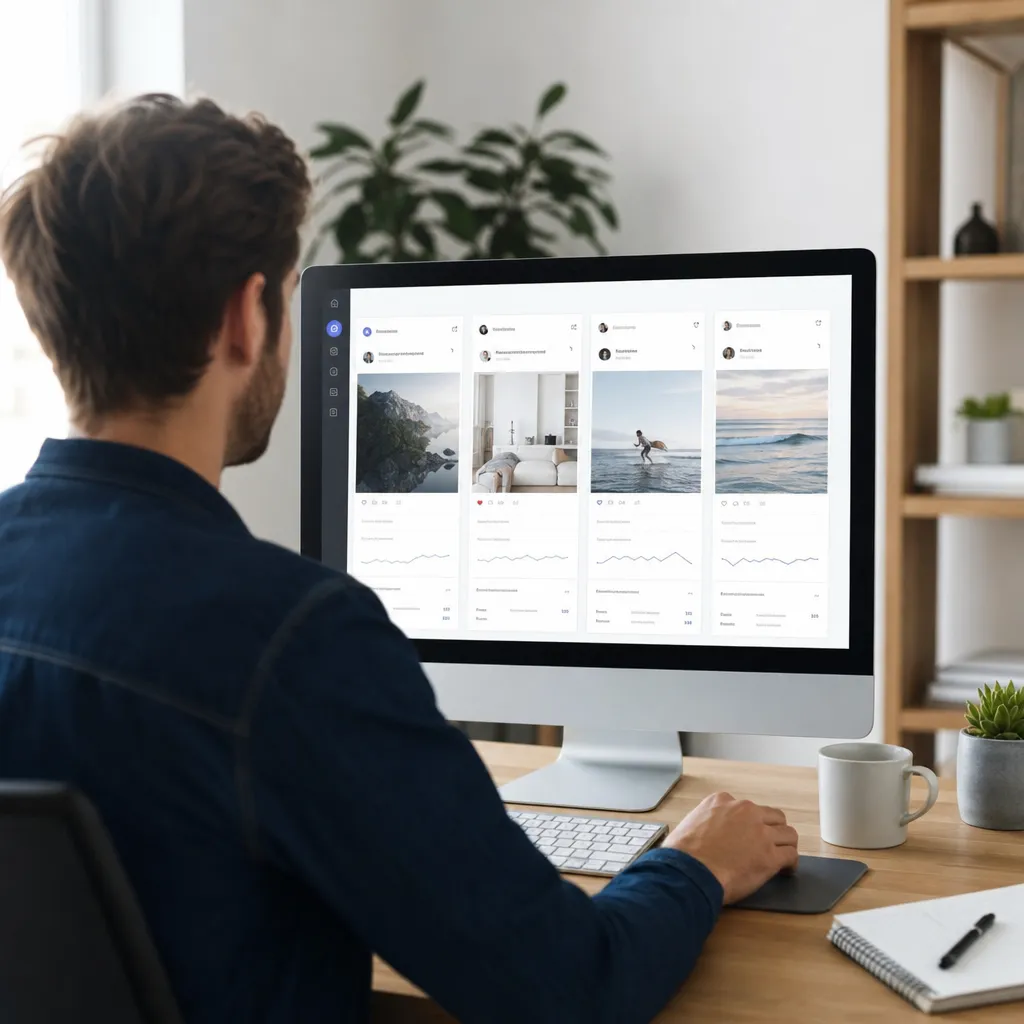
A centralized platform eliminates this fragmentation by integrating all your accounts into a single dashboard. You view notifications from all networks at once, respond to direct messages without switching between apps and program posts in advance using a unified calendar. This centralization transforms your social media routine from chaotic to organized and measurable.
In addition, professional managers offer combined analytics that show which platform brings the most engagement, which type of content works best on each network and which times your followers are most active.This consolidated information allows for optimizations that you would never do if you analyzed each network in isolation.
Advanced optimization strategies in unified managers
Most users use managers only for basic scheduling of posts, ignoring advanced features that multiply the return on investment. To extract maximum value from your tool, you need to know and master optimizations that few competitors implement.
Intelligent automation of responses and conversation flows
Modern managers allow you to create automation rules that respond to direct messages instantly according to specific criteria. For example, you can set up an automatic response when someone mentions a keyword related to your product, redirecting the user to a contact form or a sales link. This strategy works especially well on TikTok and Instagram, where the volume of messages is high and users expect quick responses.
In addition to simple auto-responders, you should implement more sophisticated conversation flows that qualify leads while they sleep or at off-hours.This intelligent automation doesn't feel robotic when set up well, keeping humanity in the interaction while you save time for higher value-added activities.
Publication by best performance hours by segment
Instead of using the same publishing time for all social networks, advanced managers allow you to schedule different posts for different audience segments simultaneously. You can schedule live content for your Brazilian audience during local peak hours, while simultaneously publishing English content to your audience in the United States at the best time for that time zone.
This time and region targeting strategy multiplies organic reach because each post reaches your audience at the exact moment they are most likely to interact.Unified platform analytics automatically identify these best-performing windows, eliminating assumptions and basing decisions on real-world data of your audience behavior.
Strategic content reuse with adaptive formats
High-performance content deserves to be reused multiple times in different formats and contexts. A unified manager allows you to program the same video for TikTok, Instagram Reels and Twitter in spaced sequences, maximizing the value of each production. You take advantage of the time invested in creating a video by adapting it to different native formats of each platform.
Some advanced managers offer artificial intelligence that automatically converts videos into static posts, creates optimized captions for each network, and even generates trend-based hashtag variations for each platform.This means that a single piece of content can generate seven to ten different variations, each optimized for its specific context.
Full control over Facebook publishing
Facebook requires specific approaches because it combines users from different generations with varying content preferences.A unified manager allows you to target posts by type of Facebook page you manage, whether you manage personal, brand or group pages.
You schedule posts for different groups of fans based on their past behaviors and demographic characteristics, testing different messages for each segment without duplicating visible posts. This automatic A/B testing strategy provides data on which message works best with which specific audience, allowing for continuous optimizations that increase return on investment in paid advertising.
Facebook integration into professional managers also allows you to monitor mentions in public posts, track comments in real time, and respond to objections from potential customers instantly.When you detect someone questioning about price or features of your product in the comments, quick responses turn that objection into a conversion opportunity.
Instagram strategic domain with integrated management
Instagram is the most visual and strategic social network for image-focused brands, so it requires specific care in monthly content schedule and aesthetic planning. A unified manager allows you to view your Instagram feed as it will be displayed to your followers, ensuring visual consistency and harmony in colors between consecutive posts.
You schedule Reels, stories, and static posts through the same dashboard, coordinating campaigns across different content formats. The platform automatically measures the performance of each content type, revealing whether Reels generate more reach than static photos in your specific niche. This information allows you to allocate production time efficiently, focusing on the formats that really bring results.
Advanced managers also integrate hashtag analytics, showing which tags your audience is following and which influencers in your niche they are using. You optimize your tags for maximum visibility among users who really have an interest in your segment, avoiding generic hashtags that attract unqualified audience. This accuracy in tag selection multiplies your organic reach without increasing advertising investment.
TikTok and Twitter under your control with a single tool
TikTok has grown explosively and represents a huge opportunity for brands that know how to strategically exploit the algorithm of this platform. A unified manager allows you to schedule TikTok videos days in advance, testing different publication times to find out when your specific audience is most engaged. Although TikTok favors spontaneous content, strategic scheduling allows consistency without seeming robotic.
Twitter works completely different from TikTok because it prioritizes real-time conversation and dynamic trend topics. Its unified manager allows you to monitor specific terms on Twitter, discovering when discussions relevant to your niche explode in trend. You prepare tweets in advance but publish at the exact moment when the conversation is most active, maximizing visibility and participation in relevant discussions.
Synergy between TikTok and Twitter through a centralized manager allows you to amplify content exponentially. A viral video on TikTok is adapted to Twitter thread, generating more visibility among different audiences. You track mentions of your brand on both platforms simultaneously, responding to comments before negative reviews amplify and propagandize problems.
Consolidated analyses that reveal invisible patterns
Conventional reports from each isolated platform mask important patterns that only appear when you analyze consolidated data from all social networks. A unified manager allows you to see which social network brings more leads, which generates conversions with higher quality and which costs more in management time per result obtained.
You discover insights such as the fact that Facebook brings high volume of clicks but low quality of leads, while LinkedIn generates fewer interactions but converts at a much higher rate. These findings allow you to allocate your budget and time according to the actual performance of each channel, cutting waste and focusing on networks that really work for your specific business.
Advanced analytics track the complete customer journey across multiple social networks, revealing that a follower often interacts with you on Instagram before clicking on a link on Twitter that takes you to your website.This holistic view of the journey allows you to optimize the experience across platforms, creating coherent narratives that guide the customer in a natural way.
Practical implementation in your digital strategy
To start implementing unified management in your business, you first list all active social networks of your brand, checking which have real audience and which are just symbolic presence. Focusing on three to four well-executed networks always beats trying to keep eight poorly managed and outdated networks.
Then choose a management platform that integrates the networks that matter to your business and that you will effectively be able to use. Many managers offer free trials, so test the usability experience before you pay. A perfect manager in features that you will never use is waste, so choose according to your actual workflow and not as promised marketing.
Start by creating a 30-day content calendar with your best posts ever published, scheduling them for future times with optimized schedules. This initial calendar fill activity takes time but creates a content reserve that automatically feeds your networks over the next 30 days while you create new content.
Common mistakes you should avoid
The most common mistake is to schedule identical content on all social networks without any adaptation. Each platform has different visual style, tone of voice and audience, so a message that works on LinkedIn can sound completely displaced on TikTok. Always adapt your message to the specific context of each network, maintaining brand consistency but varying presentation.
Another critical mistake is to neglect the management of comments and direct messages just because you now have a centralized manager. The tool facilitates access but does not replace the need for quick and personalized answers. If someone comments on a specific question about your product, it deserves human and contextualized response, not a generic automatic response that demonstrates disinterest.
Many users also make the mistake of analyzing data for just two weeks and making drastic decisions based on trends that have not yet consolidated.Your social networks need at least 60 to 90 days in operation for real patterns to emerge and you can make reliable decisions about resource allocation. Patience and consistent data collection always generate better results than optimizations based on temporary noise.
Frequently asked questions about unified social media management
Which manager works best for different business sizes? Micro-entrepreneurs and freelancers can use free tools that integrate three to four basic networks, but companies with multiple brands or marketing teams need enterprise solutions that offer permission control, content approval, and advanced reporting.
Can I schedule Instagram Stories and Facebook Stories in a unified way? Most calendar Stories managers typically allow scheduling days in advance. However, Stories have a short 24-hour lifespan, so scheduling Stories too far in advance can result in Stories appearing at inappropriate times. Use Story scheduling to ensure daily consistency but always review the content of the day before publishing, allowing final adjustments as current context.
How do managers handle viruses, hacker attacks or account compromise?Professional managers use two-factor authentication and never store your passwords, only access tokens that you can instantly revoke in social network settings. If your account is hacked, you revoke manager access on the compromised social network and change your password directly in the official application. Always choose management platforms that use OAuth authentication and follow industry-standard security standards.
What is the best time to schedule posts on different social networks? There is no universal time that works for all brands because your specific audience has unique patterns of behavior. A unified manager solves this by showing analytics of when your specific followers are most active. Use these analytics to determine their ideal schedules, testing variations over weeks to consolidate learnings.
Unified managers affect the organic reach of my posts? No, as long as you respect each social network's policies on automation. Facebook, Instagram, TikTok and Twitter explicitly allow content scheduling, so using a manager does not harm algorithms or reach. What it harms is low-quality content or posts that violate platforms' policies, regardless of how they are published.
Conclusion: transform your digital presence with centralized management
Managing Facebook, Instagram, TikTok and Twitter on a single platform is not only a matter of convenience, but of operational efficiency that directly impacts the success of your digital strategy.When you centralize management, you save hours a week that you can reinvest in creating better quality content, genuine interaction with your audience or experiments with new formats.
The advanced optimization strategies available in modern managers allow you to extract maximum value from each publication, testing variations, segmenting audiences and reusing content intelligently. You not only publish more consistently, but also with more strategic intelligence, basing decisions on consolidated data from multiple networks. This data-driven approach transforms your social media management from reactive to proactive, anticipating opportunities instead of just reacting to them.
The initial investment in learning how to use a unified manager pays off quickly when you start optimizing your operation and detecting patterns of your audience behavior that would remain invisible in isolated analyses.Start with a tool and spend 30 days just understanding its features, because mastery of the tool is essential to extract its full potential.